Chrysanthemum × morifolium (Ramat.) Hemsl.
Florist’s chrysanthemum · Asteraceae
- Accepted name
- Chrysanthemum × morifolium (Ramat.) Hemsl.
- Published (this combination)
- Gard. Chron., ser. 3, 6: 586 (1889)
- Basionym
- Matricaria × morifolia Ramat., J. Hist. Nat. 2: 240 (1792)
- Genus
- Chrysanthemum L. · Asteraceae
- Common names
- florist’s chrysanthemum, Chrysanthemum
- Native range
- China Southeast
- Introduced
- 31 regions
- Databases
- POWO · IPNI · WCVP · Catalogue of Life · GBIF
Name and origin
iPlant gives the accepted name of the cultivated chrysanthemum as Chrysanthemum × morifolium; the × marks its hybrid origin. According to the NYBG library, chrysanthemums were first cultivated in China, at first mainly as a culinary herb; in Japan they gained royal status and appear on the Emperor’s official seal and crest.
Names, synonyms and misapplied names
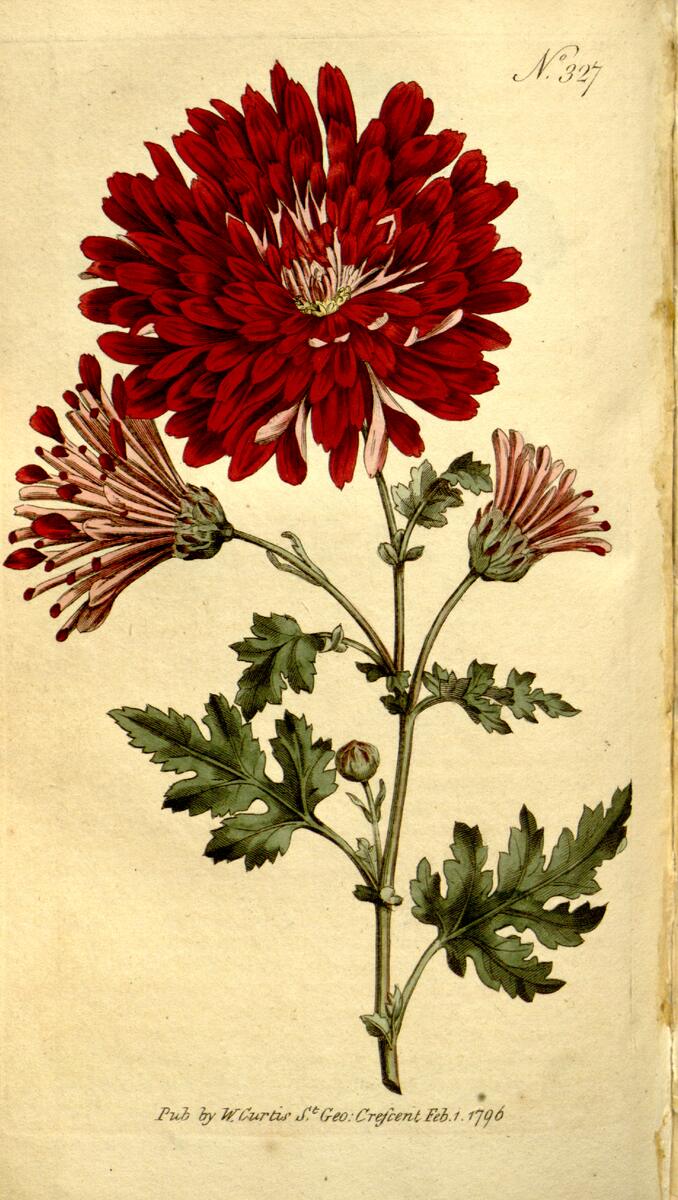
The basionym is Matricaria × morifolia, published by Ramatuelle in 1792; Hemsley transferred it to Chrysanthemum in 1889. When Curtis’s Botanical Magazine recorded its recent arrival in England in 1796 (plate 327), it used the name Chrysanthemum indicum; WCVP lists that usage as a misapplied name, the wild C. indicum being a different species. The table lists the homotypic synonyms in WCVP; heterotypic synonyms can be expanded below.
| Name | Published in |
|---|---|
| Chrysanthemum × morifolium (Ramat.) Hemsl. | Gard. Chron., ser. 3, 6: 586 (1889) |
| Dendranthema × morifolium (Ramat.) Tzvelev | V.L.Komarov (ed.), Fl. URSS 26: 373 (1961) |
| Matricaria × morifolia Ramat. | J. Hist. Nat. 2: 240 (1792) |
Misapplied names (names used for this species in error): Chrysanthemum × indicum auct. non Thunb.
22 heterotypic synonyms
| Anthemis × artemisifolia Willd. | Sp. Pl., ed. 4. 3: 2184 (1803) |
| Anthemis × grandiflora Ramat. | J. Hist. Nat. 2: 234 (1792) |
| Anthemis × stipulacea Moench | Suppl. Meth.: 258 (1802) |
| Chrysanthemum × hortorum W.Mill. | L.H.Bailey, Stand. Cycl. Hort. 2: 755 (1914) |
| Chrysanthemum × maximoviczianum Y.Ling | Contr. Inst. Bot. Natl. Acad. Peiping 3: 459 (1935) |
| Chrysanthemum × morifolium Ramat. | J. Hist. Nat. 2: 240 (1792) |
| Chrysanthemum × morifolium var. gracile Hemsl. | Gard. Chron., ser. 3, 6: 586 (1889) |
| Chrysanthemum × morifolium var. sinense (Sabine) Makino | Bot. Mag. (Tokyo) 26: 215 (1912) |
| Chrysanthemum × sinense Sabine | Trans. Linn. Soc. London 14: 145 (1823) |
| Chrysanthemum × sinense var. spontaneum Makino | Bot. Mag. (Tokyo) 23: 18 (1909) |
| Chrysanthemum × stipulaceum (Moench) W.Wight | U.S.D.A. Bur. Pl. Industr. Bull. 137: 21 (1909) |
| Chrysanthemum indicum var. maruyamanum Kitam. | Acta Phytotax. Geobot. 10: 173 (1941) |
| Chrysanthemum indicum var. purpureum Pers. | Syn. Pl. 2: 461 (1807) |
| Chrysanthemum indicum var. tsurugisanense Kitam. | Acta Phytotax. Geobot. 22: 128 (1967) |
| Dendranthema × grandiflorum (Ramat.) Kitam. | Acta Phytotax. Geobot. 29: 165 (1978) |
| Dendranthema × sinense (Sabine) Des Moul. | Actes Soc. Linn. Bordeaux 20: 562 (1860) |
| Dendranthema indicum var. maruyamanum (Kitam.) Kitam. | Acta Phytotax. Geobot. 29: 165 (1978) |
| Dendranthema indicum var. tsurugisanense (Kitam.) Kitam. | Acta Phytotax. Geobot. 29: 166 (1978) |
| Pyrethrum × sinense (Sabine) DC. | Prodr. 6: 62 (1838) |
| Pyrethrum × sinense var. plenum Maxim. | Mélanges Biol. Bull. Phys.-Math. Acad. Imp. Sci. Saint-Pétersbourg 8: 518 (1872) |
| Tanacetum × morifolium Kitam. | Mem. Coll. Sci. Kyoto Imp. Univ., Ser. B, Biol. 15: 373 (1940) |
| Tanacetum × sinense (Sabine) Sch.Bip. | Tanaceteen: 50 (1844) |
Distribution
WCVP records the species as native to 1 TDWG botanical regions and introduced in 31 more.
China Southeast
Introduced
BorneoChina North-CentralChina South-CentralColombiaCosta RicaEcuadorEl SalvadorGermanyGuatemalaHainanHondurasInner MongoliaItalyJapanJawaLesser Sunda Is.MalayaManchuriaMarianasMexico CentralMexico GulfMexico NortheastMexico NorthwestMexico SoutheastMexico SouthwestPanamáPeruPhilippinesQinghaiSumateraTunisia
Historic plates and the names printed on them
Plates carry the name in use at the time. Using the WCVP synonymy and misapplied names, the table maps each printed name to the current species or subspecies.
| Printed name · source | Current name | |
|---|---|---|
| Chrysanthemum indicum(正文) Curtis's Botanical Magazine · 327 · 1796 | Chrysanthemum × morifolium (Ramat.) Hemsl. misapplied name (WCVP: Chrysanthemum × indicum auct. non Thunb.) |
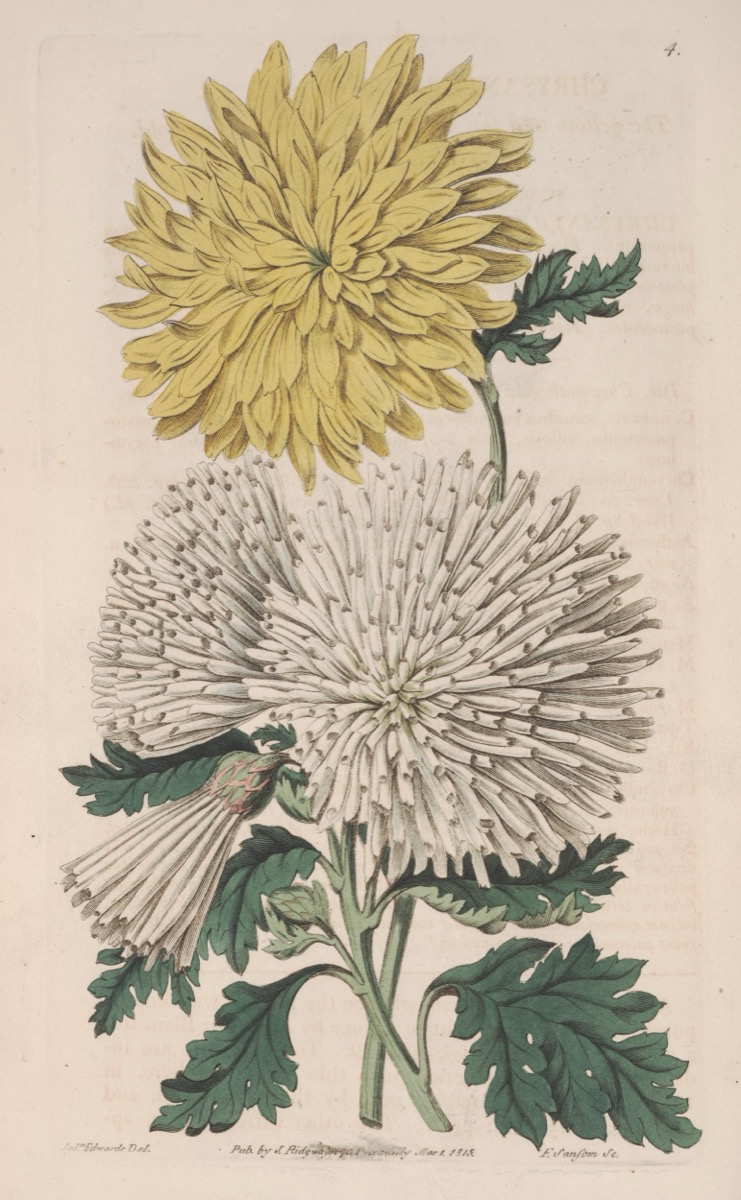 | Chrysanthemum indicum var. Edwards's Botanical Register · Pl. 4 · 1815 | to be checked |
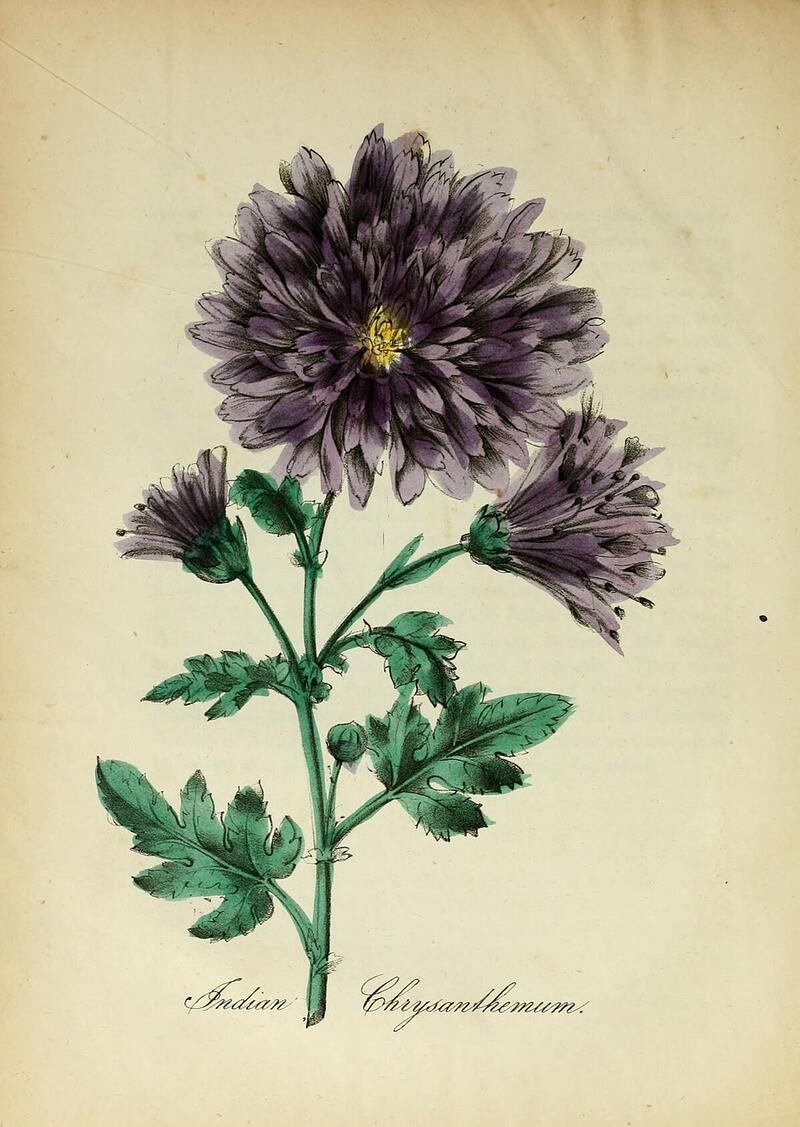 | Indian Chrysanthemum The American Flora · pl. 1 · 1855 | Chrysanthemum × morifolium (Ramat.) Hemsl. misapplied name (WCVP: Chrysanthemum × indicum auct. non Thunb.) |
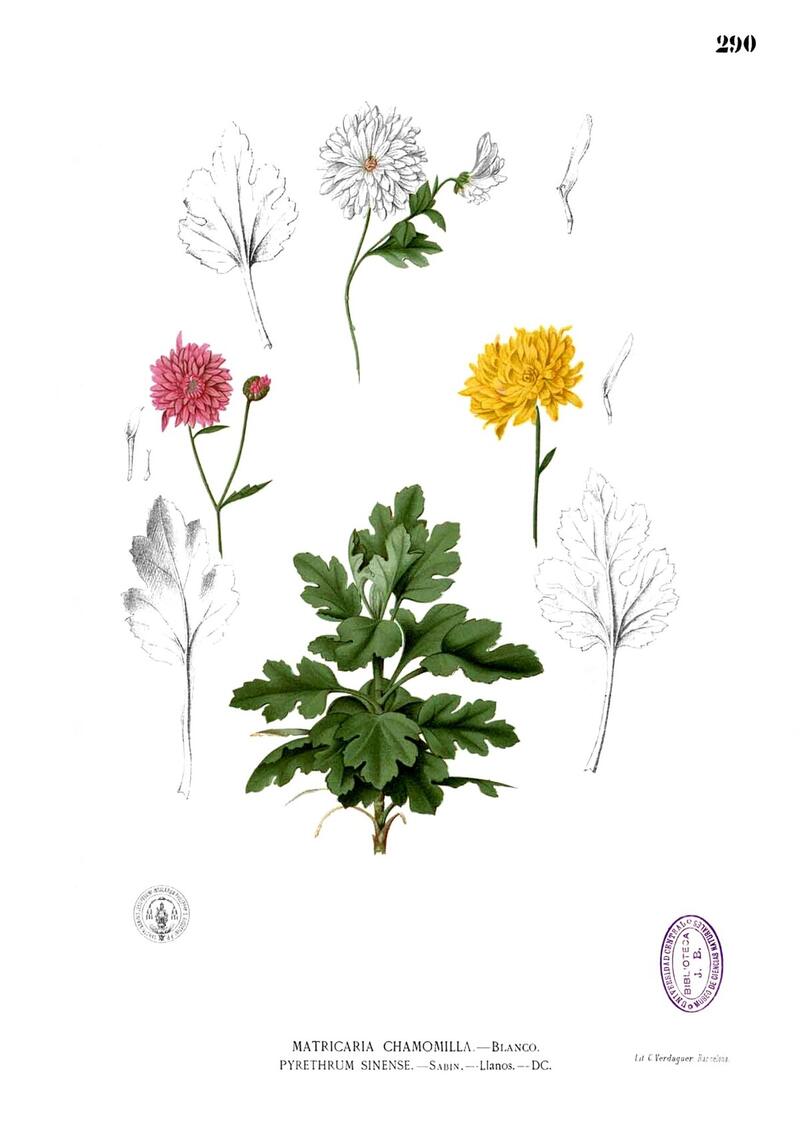 | Pyrethrum sinense Flora de Filipinas, gran edición (Atlas) · 290 · 1880–1883 | Chrysanthemum × morifolium (Ramat.) Hemsl. WCVP synonym: Pyrethrum × sinense (Sabine) DC. |
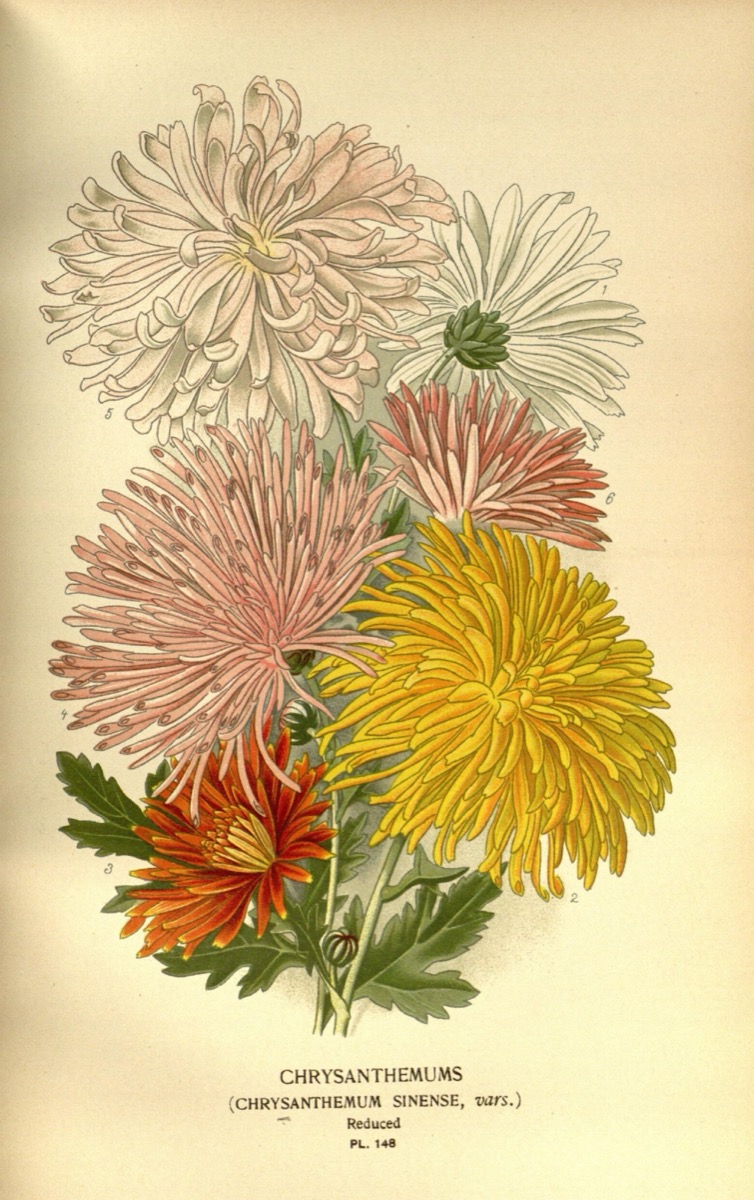 | Chrysanthemum sinense, vars. Favourite Flowers of Garden and Greenhouse · Pl. 148 · 1897 | Chrysanthemum × morifolium (Ramat.) Hemsl. WCVP synonym: Chrysanthemum × sinense Sabine |
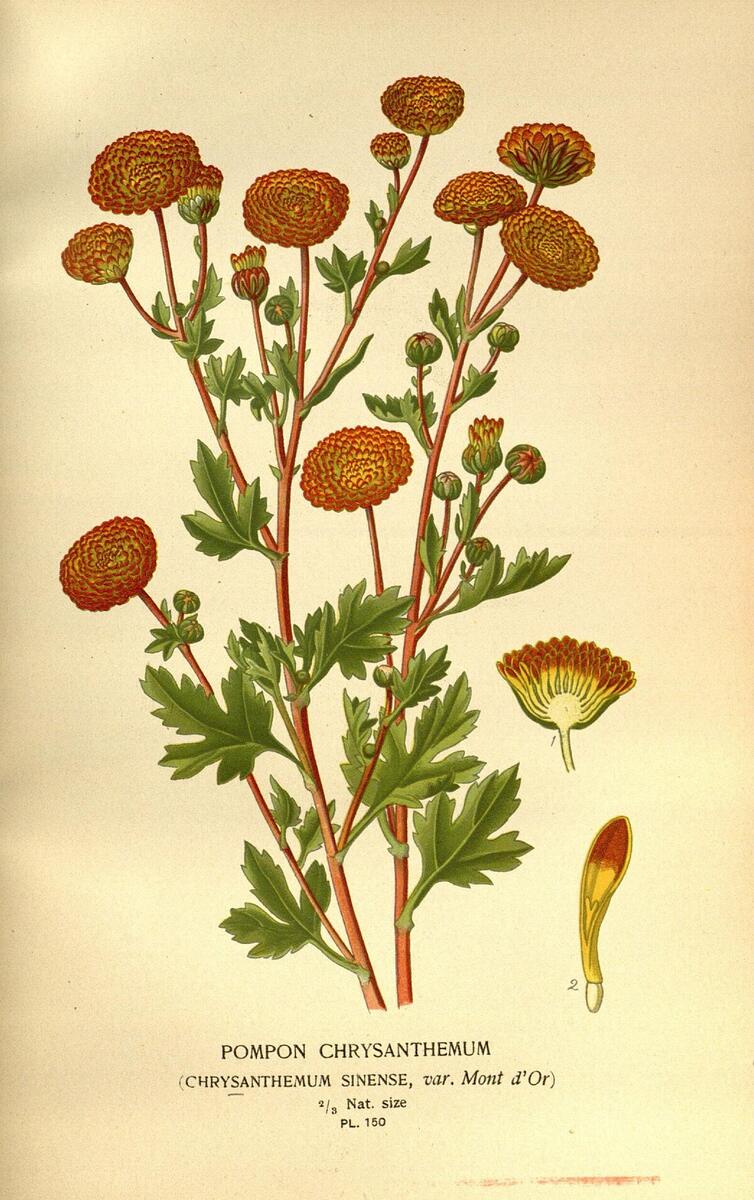 | Chrysanthemum sinense, var. Mont d'Or Favourite Flowers of Garden and Greenhouse · Pl. 150 · 1897 | Chrysanthemum × morifolium (Ramat.) Hemsl. WCVP synonym: Chrysanthemum × sinense Sabine |