Unscented and low-pollen flowers
43 cut flowers with little or no scent and no heavy pollen — for scent-sensitive clients, dining tables and hospitals — with vase life, season and pet safety, plus what to avoid.
| Flower | Vase life | In season | Pets |
|---|---|---|---|
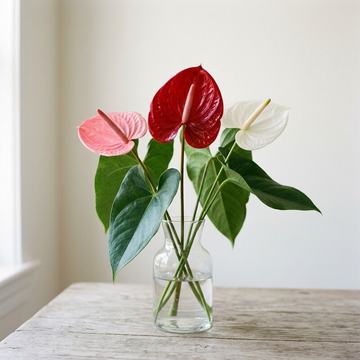
| Anthurium | 14–21 days | Year-round | mildly toxic |
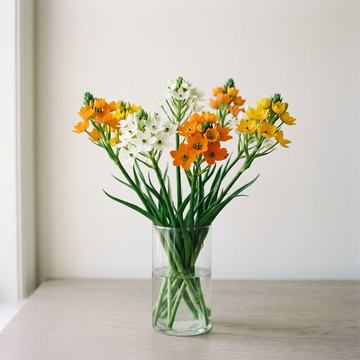
| Star of Bethlehem (Ornithogalum) | 14–21 days | Year-round | mildly toxic |
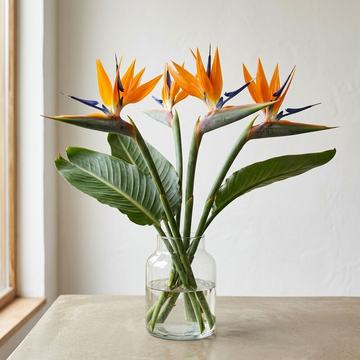
| Bird of paradise | 10–14 days | Year-round | mildly toxic |
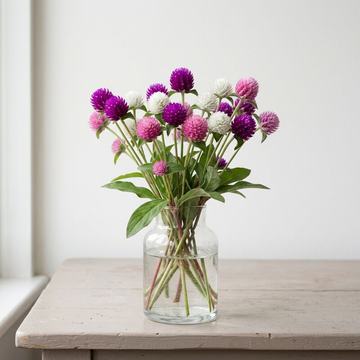
| Globe amaranth | 10–14 days | Summer, Autumn | — |
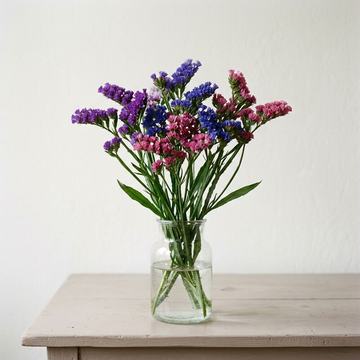
| Statice | 10–14 days | Year-round | — |
| Dendrobium orchid | 10–14 days | Year-round | — |
| Craspedia (billy buttons) | 10–14 days | Year-round | — |
| Protea | 10–14 days | Winter, Spring | — |
| Alstroemeria | 10–14 days | Year-round | ✓ ASPCA non-toxic |
| Eryngium (sea holly) | 10–14 days | Summer | — |
| Pincushion protea | 10–14 days | Winter, Spring | — |
| Kangaroo paw | 10–14 days | Spring, Summer | — |
| Heliconia | 10–14 days | Year-round | — |
| Lisianthus | 7–14 days | Year-round | — |
| Calla lily | 7–10 days | Year-round | mildly toxic |
| Celosia | 7–10 days | Summer, Autumn | ✓ ASPCA non-toxic |
| Snapdragon | 7–10 days | Spring | ✓ ASPCA non-toxic |
| China aster | 7–10 days | Summer, Autumn | ✓ ASPCA non-toxic |
| Trachelium | 7–10 days | Summer | — |
| Gladiolus | 7–10 days | Summer, Autumn | mildly toxic |
| Hellebore | 7–10 days | Winter, Spring | mildly toxic |
| Agapanthus | 7–10 days | Summer | — |
| Solidago (goldenrod) | 7–10 days | Summer, Autumn | — |
| Sunflower | 6–10 days | Summer | ✓ ASPCA non-toxic |
| Gerbera daisy | 6–10 days | Year-round | ✓ ASPCA non-toxic |
| Hydrangea | 5–7 days | Summer | mildly toxic |
| Delphinium | 5–8 days | Spring, Summer | mildly toxic |
| Zinnia | 5–7 days | Summer, Autumn | ✓ ASPCA non-toxic |
| Queen Anne's lace (Ammi) | 5–7 days | Spring, Summer | — |
| Lupin | 5–7 days | Spring, Summer | mildly toxic |
| Daisy (marguerite) | 5–7 days | Spring, Summer | mildly toxic |
| Cosmos | 5–7 days | Summer, Autumn | — |
| Cornflower | 5–7 days | Spring, Summer | — |
| Ranunculus | 5–8 days | Winter, Spring | mildly toxic |
| Scabiosa | 5–7 days | Summer | — |
| Astilbe | 5–7 days | Summer | — |
| Veronica | 5–7 days | Summer | — |
| Tulip | 4–7 days | Winter, Spring | mildly toxic |
| Dahlia | 4–6 days | Summer, Autumn | mildly toxic |
| Clematis | 4–6 days | Spring, Summer | mildly toxic |
| Camellia | 3–5 days | Winter | ✓ ASPCA non-toxic |
| Anemone | 3–6 days | Winter, Spring | mildly toxic |
| Poppy | 2–4 days | Spring | mildly toxic |
Avoid
In Floreboard you can mark a client as scent- or pollen-sensitive; every later design for them flags these flowers automatically.
FAQ
What flowers suit someone sensitive to scent?
Choose flowers with little or no scent, such as gerbera daisy, lisianthus, bird of paradise, calla lily, statice, anthurium, and avoid strongly scented ones like lily, narcissus (daffodil), freesia, hyacinth, lily of the valley.
Why use unscented flowers on dining tables?
Strong fragrance competes with food and wine, so restaurants and banquet tables usually use unscented or lightly scented flowers.
Are unscented flowers allergy-free?
Not necessarily — pollen is a common trigger too. This list excludes heavy-pollen flowers, but people with severe allergies should still check individually.