Cut flower care and conditioning guide
How florists condition cut flowers so they last: seven steps for every stem, plus the flowers that need shallow water, searing, splitting, no fridge or no fruit nearby.
Key facts
- Clean water and a fresh cut matter more than anything else.
- Strip all foliage below the waterline and use flower food at the labelled dose.
- Keep ethylene-sensitive flowers away from ripening fruit.
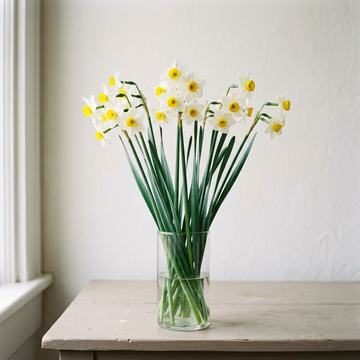
- Condition daffodils alone for 12–24 hours before mixing them with other flowers.
The seven steps that apply to almost every flower
- Start with clean buckets and vases — Bacteria blocking the stems is the main reason cut flowers fade early. Scrub with detergent or dilute bleach and rinse.
- Recut the stems — Take 2–3 cm off at an angle with a sharp knife or snips. Do not crush the stem (woody branches are the exception). Get it into water straight away.
- Strip everything below the waterline — Submerged leaves rot quickly and turn the water into bacterial soup.
- Use clean water with flower food — Mix at the dose on the packet. Room-temperature water suits most flowers; bulb flowers (tulips, hyacinths, narcissus) prefer it cold.
- Let them drink before you arrange — At least two hours, ideally overnight, somewhere cool and out of the light.
- Place them well — Away from direct sun, radiators, air-conditioning vents and ripening fruit.
- Top up daily, change the water every two or three days — Trim another 1–2 cm off the stems when you do, and remove faded blooms.
Flowers that need something different
| Handling | Flowers | Why |
|---|---|---|
| Condition alone first (sap harms other flowers) | Narcissus (daffodil) | 12–24 hours in their own bucket; do not recut when adding them to the mix. |
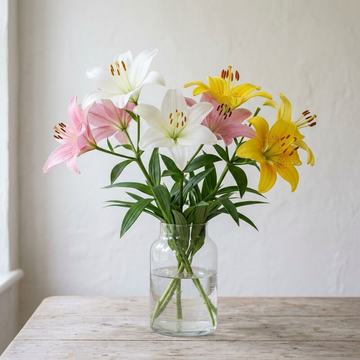
| Remove the anthers (pollen stains) | Lily | Pull the anthers as each bloom opens, before the pollen ripens. |
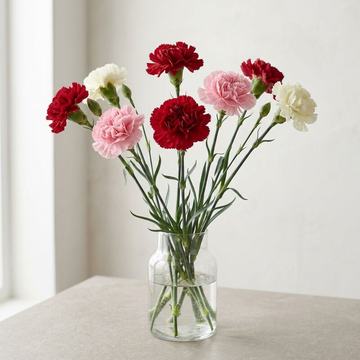
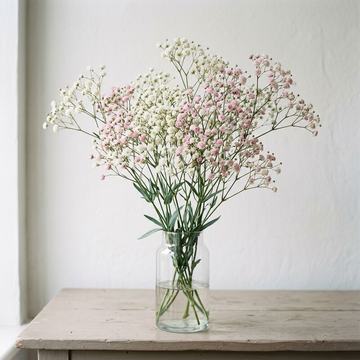
| Keep away from fruit and fading flowers (ethylene-sensitive) | Lily, Carnation, Baby's breath, Orchids (cut), Delphinium, Freesia, Stock (Matthiola), Dendrobium orchid, Waxflower, Snapdragon, Alstroemeria, Sweet pea, Agapanthus, Bouvardia | Ethylene makes them drop florets, close up or wilt days early. |
| Shallow water only | Gerbera daisy, Calla lily, Tulip, Anemone, Ranunculus, Sweet pea, Grape hyacinth (Muscari) | Soft or hairy stems rot when they sit deep; a few centimetres is enough. |
| Store and transport upright | Snapdragon, Gladiolus, Lupin, Delphinium | Spikes bend upward within hours if laid flat. |
| Sear or hot-water dip the cut ends | Poppy, Clematis, Dahlia, Hellebore, Astilbe, Dusty miller, Wisteria | Seals milky sap or forces water into stems that wilt easily. |
| Split the woody ends | Plum blossom, Cherry blossom, Peach blossom, Crabapple blossom, Bamboo, Pine, Maple branches, Magnolia, Wisteria, Forsythia, Willow, Pussy willow, Red-twig dogwood, Azalea, Spiraea, Osmanthus, Holly, Lilac, Viburnum (snowball) | Cut a cross 2–3 cm into the base, or crush it lightly, and stand in deep water. |
| No cold storage | Anthurium, Heliconia, Bird of paradise, Dendrobium orchid, Orchids (cut) | Tropical flowers are damaged by chilling below about 10–13 °C. |
| Short-lived: sell and deliver fast | Tulip, Tree peony, Narcissus (daffodil), Camellia, Iris, Anemone, Lily of the valley, Gardenia, Jasmine, Dahlia, Lotus, Water lily, Clematis, Poppy, Sweet pea, Grape hyacinth (Muscari) | Four days or less at the low end — make up on the day and tell the client. |
| Keep dry (no water at all) | Pussy willow, Cotton stems, Wheat ears, Lotus pod | Dried or dry-kept materials mould or sprout when wet. |
Every flower page has its own handling note. See also: Longest-lasting cut flowers · Cut flower vase life chart · Flowers that dry well · Floristry glossary
FAQ
How do you make cut flowers last longer?
Use a clean vase, recut the stems, strip leaves below the waterline, add flower food, keep the flowers cool and away from fruit, and change the water every two or three days.
What is in flower food, and does it work?
Sugar for energy, an acidifier that helps the stems take up water, and a biocide that keeps bacteria down. Used at the labelled dose it reliably outperforms plain water.
Why should flowers be kept away from fruit?
Ripening fruit gives off ethylene gas, which makes sensitive flowers drop petals and wilt early. The most sensitive in our guide include lily, carnation, baby's breath, orchids (cut), delphinium, freesia, stock (matthiola), dendrobium orchid.
Should flower stems be cut at an angle?
An angled cut gives a larger surface and stops the stem sitting flat on the bottom of the vase. What matters most is a clean, fresh cut with a sharp blade and getting the stem into water immediately.
Can daffodils be mixed with other flowers?
Yes, after conditioning them alone for 12–24 hours so the sap drains; add them without recutting.